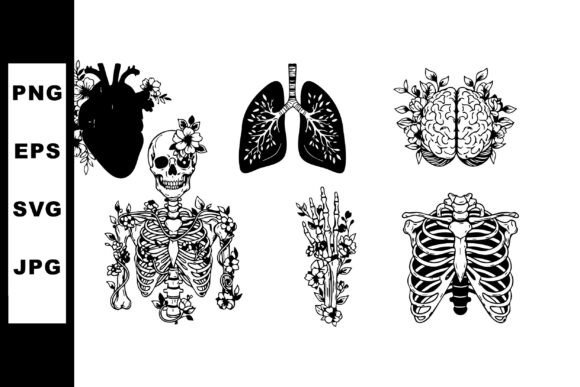
Anatomical Heart Lungs Brain Silhouette Review
When I first opened the Anatomical Heart Lungs Brain Silhouette file, my initial reaction was a mix of intrigue and caution. As someone who has spent years digitizing and stitching designs for both personal projects and commercial clients, I know that a striking visual on a screen does not always translate to a flawless stitched result. This vector presents a bold composition: a black silhouette featuring the heart, lungs, brain, and skeletal elements, all interwoven with delicate floral details. It is an Illustrations category piece that feels more like a statement than a simple decoration. The mood it creates is gothic yet organic, mysterious but grounded in nature. It is exactly the kind of design that demands attention, making it perfect for makers who want their finished product to have a strong narrative voice.
From Screen to Stitch: A Real-World Scenario
To truly understand how this design performs, I put myself in the shoes of a small business owner preparing for a boutique launch. Imagine you are creating a line of custom embroidered tote bags or perhaps a series of high-end sweatshirts for a niche market that appreciates anatomical art mixed with botanical beauty. You select the Anatomical Heart Lungs Brain Silhouette as the centerpiece for a limited-edition collection. The goal is to create a piece that looks professional enough to command a higher price point but retains the charm of a handmade item.
In this scenario, the design works beautifully as a chest logo on a heavy cotton sweatshirt or centered on a canvas tote bag. The contrast between the stark silhouette and the soft floral vines suggests a balance between life and decay, a theme that resonates deeply with modern consumers. When I visualized the final product, I saw customers reacting positively to the uniqueness of the motif. It moves away from generic flowers or standard hearts, offering something that feels curated and thoughtful. For an Etsy seller or a craft fair vendor, this design offers a distinct visual identity that can help your shop stand out in a crowded marketplace.
Evaluating Stitch Density and Clarity
The success of any embroidery project hinges on how well the stitches hold up over time. With the Anatomical Heart Lungs Brain Silhouette, the density of the fill stitch is critical. Because the design relies on a solid black silhouette to convey the anatomy, the machine must lay down enough thread to prevent the fabric from showing through, especially if you are stitching on lighter fabrics. If the density is too low, the intricate details of the skull and organs might look patchy, ruining the "striking" quality mentioned in the description.
I recommend checking the stitch density carefully before running a full production run. The floral elements likely utilize a combination of satin stitch for the outlines and fill stitch for the petals, while the main anatomical shapes require a robust fill. If you are using this as a digital embroidery file for a commercial venture, ensure the file format supports the specific machine you are using. The transition between the dense skeleton areas and the lighter floral accents needs to be smooth. In a real-world application, such as on a baby onesie or a delicate apron, you must verify that the thread count isn't so high that it causes puckering on the fabric texture.
Selecting the Right Fabric and Hoop Size
Not every surface is suitable for this level of detail. The Anatomical Heart Lungs Brain Silhouette thrives on stable, medium-weight fabrics. Think sturdy denim for caps, thick canvas for tote bags, or high-quality fleece for hoodies. These materials provide the necessary stability to support the weight of the embroidery without distorting the shape of the brain or lungs. However, there are limitations to consider. If you attempt to use this design on stretchy jersey knit without proper stabilizer, the tension will cause the floral details to warp, making the design look uneven.
Hoop size is another factor that cannot be overlooked. While the design might look impressive on a large hoop, attempting to fit it into a small 4x4 inch area could compress the details too much. Tiny lettering or fine lines within the floral section might disappear entirely if the scale is reduced too aggressively. For a personalized gift, such as a pillow cover or a kitchen towel, the larger surface area allows the design to breathe, letting the customer appreciate the artistic botanical details. Conversely, if you are creating a small embroidered patch, you may need to simplify the layout or remove some of the finer floral elements to ensure they remain visible after trimming.
Navigating Challenges with Dark and Textured Fabrics
One of the most common pitfalls in commercial embroidery is ignoring the background color. Since the primary element of this design is a black silhouette, stitching it directly onto dark fabric can be challenging unless you use a high-density underlay or a contrasting thread color. On a black t-shirt, a black outline might vanish completely. In these cases, using a white or light gray underlay can help lift the design, though it adds bulk. Alternatively, you might choose to stitch the silhouette in a deep navy or charcoal to maintain the mood while ensuring visibility.
Textured fabrics also present a unique set of obstacles. While a rough linen or a textured wool blend can add character to a handmade product, the needle struggles to penetrate uneven surfaces consistently. This can lead to skipped stitches in the detailed corners of the ribcage or the curves of the brain. For best results, stick to smoother weaves for the main body of the garment. If you are determined to use a textured material, test the design on a scrap piece first to see how the needle interacts with the weave. This step is crucial for maintaining brand consistency and avoiding returns due to poor stitch quality.
Strategic Use Cases for Designers and Makers
This design is versatile enough to span various categories, from holiday gifts to professional branding. During the holidays, the anatomical theme combined with florals makes for a unique, edgy gift option that differs from traditional Christmas motifs. It fits perfectly on a custom apron for a chef who loves science or a coffee mug sleeve for a creative entrepreneur. For a wedding gift, it could be reimagined as a sophisticated piece of nursery decor, perhaps stylized to represent the connection between family and biology.
However, there are areas where caution is advised. Avoid placing this design on products that undergo frequent washing and heavy wear, such as work uniforms or children's play clothes, unless you reinforce the edges properly. Dense stitch areas on thin fabric can tear over time. Additionally, be mindful of the licensing terms before selling finished items. If you are using this as a graphics asset for a digital product preview, ensure you have the right permissions to display it commercially. Always review the file specifications to confirm whether the design includes a satin stitch border that protects the edges or if it requires additional stabilization.
Final Thoughts on Professional Application
The Anatomical Heart Lungs Brain Silhouette is a powerful tool for designers looking to inject personality into their work. It bridges the gap between scientific illustration and artistic expression, offering a fresh take on anatomy. By paying close attention to thread colors, fabric choice, and stabilizer selection, you can transform this vector into a stunning finished product that customers will love. Whether you are an experienced embroiderer or a new Etsy seller, taking the time to test the design ensures that your final output matches the high standards of your brand. Remember, the difference between a good design and a great one often lies in the preparation and the care taken during the stitching process.