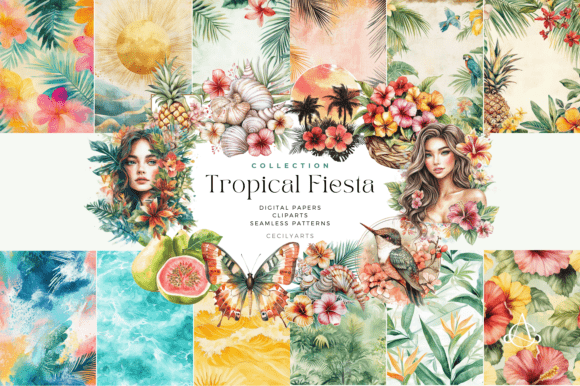
Tropical Fiesta Collection Review
I have spent years stitching everything from delicate heirloom pieces to rugged workwear, and I know that the difference between a project that feels professional and one that looks amateur often comes down to the source material. When I first pulled up the Tropical Fiesta Collection, my initial reaction wasn't just about how pretty it looked on the screen; it was about how those watercolor textures would translate into thread. As an illustrator turned embroidery designer, I am always skeptical of digital graphics claiming to be ready for the hoop. This bundle promises a vibrant, sun-kissed aesthetic, but can it survive the friction of high-speed machine stitching? After putting this Illustrations and Graphics set through its paces in several real-world scenarios, here is what I found.
The Mood Before the Machine
The Tropical Fiesta Collection immediately evokes a sense of warmth and celebration. The watercolor style offers soft edges and organic color bleeding that digital vector art simply cannot replicate. For an embroiderer, this is a double-edged sword. On paper, these designs scream summer festivals, beachside boutiques, and relaxed weekend vibes. However, when you are planning a custom apparel piece or a boutique product, the visual personality must align with the durability required for wear and tear.
The layout feels natural for medium-to-large projects. Unlike dense, blocky clipart that often results in a stiff, plastic-looking finish, the fluid lines of this collection suggest a softer hand. It feels right at home on a canvas tote bag or a linen apron where the fabric breathes. But before you commit to a full production run, you have to ask yourself: will this hold up to the wash? The answer lies in how well the design translates from a flat image to a stitched surface.
Real-World Application: The Custom Tote Bag Scenario
Last month, a local artisan asked me to review a design for a line of eco-friendly tote bags she planned to sell at a craft fair. She wanted something that felt handmade but had a polished look. I decided to test the Tropical Fiesta Collection on her request. We chose a heavy cotton canvas for the bags, which provided a stable base for the stitching.
The challenge with watercolor-style embroidery files is managing the transition between colors. In the Tropical Fiesta Collection, the gradients are implied rather than explicitly defined by stitch lines. To make this work, I had to carefully select thread colors that mimicked the saturation of the original digital papers. If you use standard polyester threads without considering the value shift, the design can look muddy. By choosing slightly brighter variegated threads, we captured the "sun-kissed" feel perfectly.
The result was stunning. The soft edges of the watercolor effect translated beautifully into a satin stitch border, giving the finished product a painterly quality. Customers at the fair stopped to touch the texture, noting that it didn't feel like a mass-produced sticker but a genuine handmade product. This is exactly where the Tropical Fiesta Collection shines: it elevates simple items like tote bag designs into premium goods that justify a higher price point.
Where Caution is Required
While the aesthetic is compelling, not every project is a match for this specific design set. There are critical limitations you must consider before running the needle. First, avoid using this on small hoop sizes. The intricate details of the watercolor splashes and fine lines can get lost if you try to cram them into a 4x4 inch area. The resulting stitch density might become too tight, causing the fabric to pucker or the thread to break.
Textured fabrics also pose a risk. While heavy canvas works well, thin linens or stretchy knits like t-shirt jersey require careful stabilizer placement. Without a strong cut-away stabilizer underneath, the pull of the fill stitches could distort the fabric, ruining the delicate shape of the tropical elements. Similarly, dark fabrics present a visibility issue. Watercolor designs rely on light and shadow; on a black background, the subtle color shifts might disappear unless you use a high-density underlay or a white backing layer, which adds bulk.
For embroidered patches intended for frequent washing, such as those on work uniforms, the open areas of the watercolor style might snag more easily than solid block designs. If the project requires extreme durability, like a sweatshirt embroidery meant for outdoor labor, you might want to simplify the design or add a protective top-stitch around the perimeter. Always test the design on scrap fabric first to ensure the thread colors provide enough contrast against your chosen background.
Impact on Brand and Product Value
For Etsy sellers and small shop products, the visual appeal of your finished item directly correlates to customer trust. A sloppy digitization job can ruin even the best design, but a well-executed Tropical Fiesta Collection piece signals professionalism. When a buyer receives a personalized gift or a custom cap with a design that has clear definition and smooth color transitions, they perceive higher value.
This collection is particularly effective for holiday embroidery or seasonal collections. The tropical theme fits perfectly for summer weddings, beach parties, or vacation-themed merchandise. It helps create a cohesive brand identity across different items, from kitchen towels to nursery decor. When you use consistent design assets, your craft business looks established and reliable. Buyers are more likely to return to a shop that presents a unified, artistic vision rather than a disjointed mix of generic clipart.
However, remember that digital assets are just the starting point. You must still apply your own expertise. Check whether the design works for both personal and commercial projects by reviewing the license terms carefully. If you plan to sell finished items made with these designs, ensure you have the proper rights. Also, inspect small details like tiny lettering or decorative accents before finalizing the file. Sometimes, what looks good on a monitor needs adjustment for the physical reality of thread thickness.
Practical Notes for the Designer
- Test on Scrap: Never run a full batch on expensive fabric without a test run. Check how the running stitch and fill stitch interact with your specific material.
- Hoop Size Matters: Confirm the recommended hoop size for the design. Attempting to scale a large digital embroidery file down too much can lead to lost detail.
- Stabilizer Selection: Use the appropriate stabilizer for the fabric weight. A tear-away might not be sufficient for a heavy-duty embroidery project on denim or canvas.
- Mockup Testing: Create printable mockups in black and white to see if the design holds its shape without relying on color perception.
- Licensing Check: Verify if the graphics allow for commercial use in finished goods before listing them on marketplaces.
In conclusion, the Tropical Fiesta Collection is a versatile asset for any designer looking to add a splash of organic color to their portfolio. It excels in projects that benefit from a soft, artistic touch, provided you respect the technical limitations of machine embroidery. With the right setup and attention to detail, it can transform a simple embroidery project into a standout piece that customers love.